
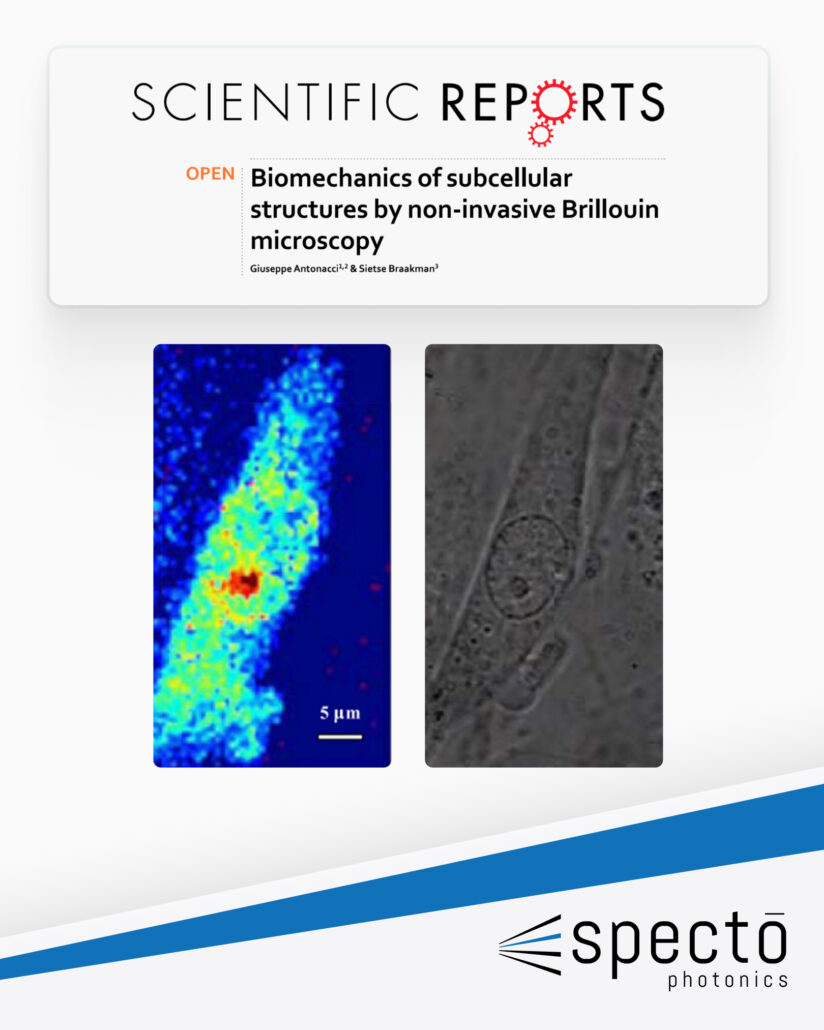
Our study revealed the biomechanics of intracellular structures, such as the intracellular envelope and the enclosed nucleoli, that were previously unknown, further showing how these compartments respond to external chemical stimuli.
This demonstrated the potential of this high-resolution, three-dimensional imaging technique to map the mechanical properties of single living cells in a non-invasive way, opening a new window into how cells respond to treatment.
A decade on, the field continues to move forward, building on these early insights to better understand living systems and what lies beneath the surface.
We are proud to be among the key drivers of this progress.
Explore the article to take a closer look: https://www.nature.com/articles/srep37217